At times, huge predators can be pretty cuddly. Big lions, ferocious tigers and majestic birds of prey can certainly evoke sympathy, although they’d love to tear you to pieces and feed you to their young. In part, this is because some animals have been endowed with recognisable (i.e. “human”) qualities in myths through the ages – from Aesop’s fables to Lion Kings and Jungle Books. The good animals are beautiful, admirable and struggling for good causes, while the evil animal characters (hyenas, snakes, vultures, etc) are ugly, threatening, repulsive and thereby inherently devious.
On a good day, we can extend our sympathies to more species than those conveniently mythologised. After all, even hyenas lovingly take care of their small ones, although it may not be a matter of saving up for college but rather providing some half-rotten spoil, still encrusted with the anguished blood of a helpless victim. But does this apply to non-mammals too? Strangely enough, there seems to be a distinct line when it comes to potential sympathy for animals. What about insects? Bugs? Miniature predators encased in armour, with no bipedal mammal resonance whatsoever?
All fears are essentially instinctual, and we have roamed through stages of brutal development which have left a whole range of genetic memories, evoking everything from slight distaste to acute phobia. The image is still pretty clear: each and everyone is a potential threat to us. If we see it, we can try to fight or run away. But what’s with these small critters? Why do we fear these little bugs as we do creatures larger than ourselves? One of the reasons is this very fact of invisibility – more or less. Although small, they can rock the entire boat by poison, infection, and other internal reactions. Which nuclear missile, police force or armed ranger service can deal with that? The micro parasites are as intimidating as the macro ones.
Then there’s that other aspect. The aspect of blood. These little fuckers, like mosquitos and ticks, feed off of our own life juice. Sure, to facilitate for their own survival, but who cares? There is something doubly, or even triply, disturbing about invisible teeth or snouts not only penetrating our skin but also sucking our very own life juice from us. It’s a rape in many ways. Then add some residual infection, inflammation, borelia, lyme disease etc to that. No wonder we instinctively want to smack and kill them immediately! Whether guilty or innocent, they all represent an abusive assault, and with malicious intent to boot.
Can we find similar things in other parts of our lives? Where certain specimen can evoke sympathy, even though non-resonant, and others are just plain vampiric? Absolutely. If we look to art, that inexhaustible field of human reflection, we see all facets of how this phenomenon works. Let’s leave aside art that we love and resonate with (and thereby feel a sympathy for, and meaning in). That art constitutes our pets; domesticated, lovely, sometimes irritating but endearingly so. Other kinds of art are beyond this generally appreciated field and constitute the ill at ease, the problematic, the potentially threatening and outright dangerous. And then we come to the vampiric, which, although small and perhaps even invisible to most, can penetrate our existential skin and drain us of actual energy.
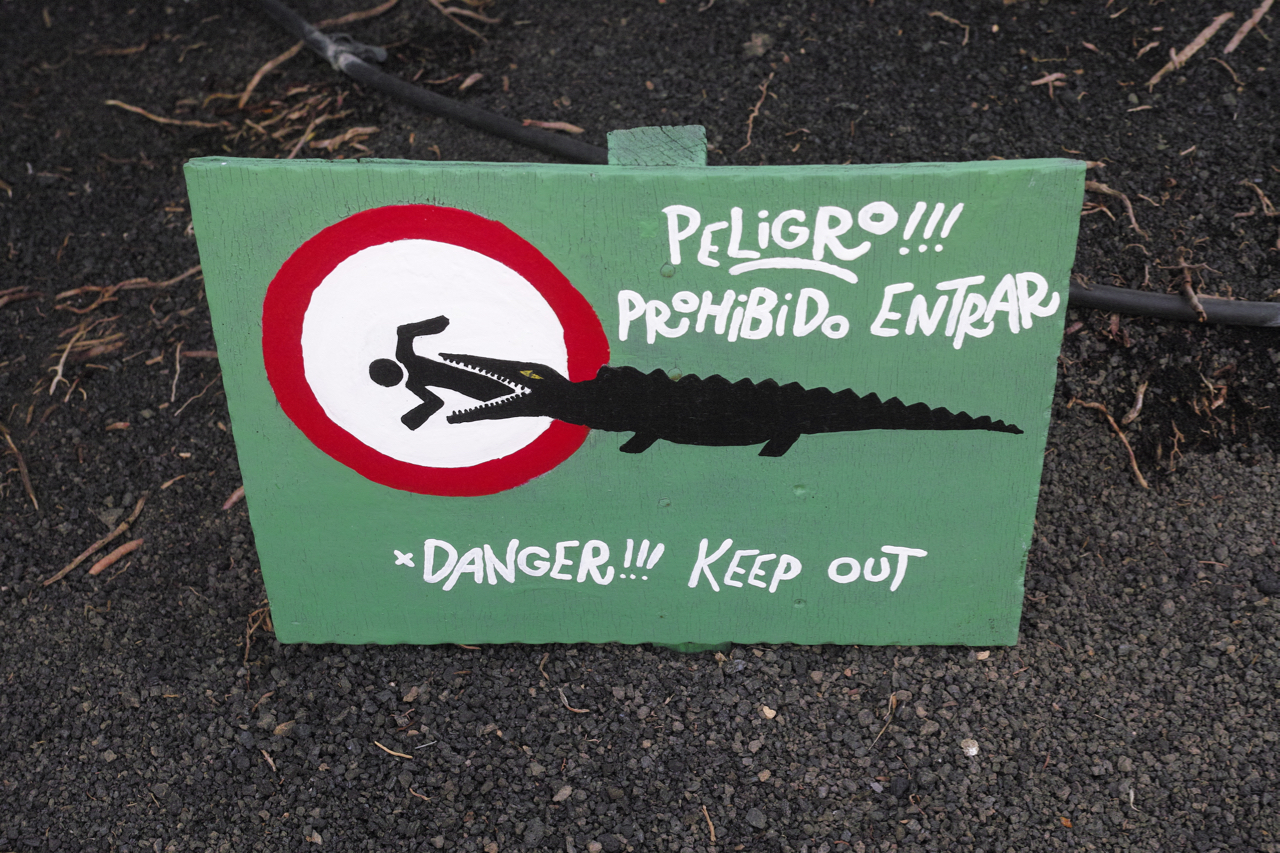
The ill at ease ones are both easier and more difficult to pinpoint. After all, the definitions of art, as well as the extended one of beauty, lie in the beholder’s eye and mind. The hyena or alligator art would be that which can’t but help be ferocious and provocative – and visibly so. A pathological will to devour resistance (and art critics) in a process of ruthlessly taking up space and revelling in its own feeding. After an initial period of beholder attuning, the behaviour, attitude and remains (the artworks) can actually be integrated, just as when we temporarily might feel a slight sympathy for a hyena mother feeding its puppies. This would be any paroxysmic art that transgresses a status quo, such as abstract expressionism or even dada before that. There is an overall shock for sure, but those with a bird’s eye view can sense a meaning and a power in what’s being done. It’s a biotopic infusion rather than a drainage; a method to the madness in form or execution, more or less conscious and deliberate. This art will usually be integrated after the shock-and-disgust phase, and ultimately become a new status quo-provoking carrion carrier in and for younger generations.
But what about the ticks and mosquitoes of art? That and those who not only prick our skin in order to pathologically provoke but actually penetrate it with malicious intent? Well, there’s plenty of that, and we can see that only in part has it to do with execution. To a considerably larger extent, it’s a matter of attitude, narcissism and pathology. We aren’t here robbed so much of our actual blood as by its slightly more abstract counterpart: “energy”.
Tick-art would be graffiti, for instance. Undoubtedly, there is elaborate execution and aesthetics involved but the attitude is a pathologically anarchistic one in which the communication is one-sided and esoteric. If it extends a message, it’s only to others of like tick-mind. But for the folks behind or in front of the “canvas” (wall, train, bus, cityscape etc) on a regular basis, it’s just a selfish, ruthless and costly excretion of infantilism. A child that glee- or joyfully (or both) draws or paints on a wall at home provokes a disruption, an anger but also, most often, a forgiveness. Usually, the child knows no better and is thus excused. A graffiti artist is consciously aware of the damage done and yet proceeds, no doubt thrilled by the transgression. The experience itself is exciting and, if well-executed and properly tagged, can elevate the artist’s ego within a context of respect and status within that specific community. But for the organism to whom the skin/surface belongs, it is mere “tickery”. There will be frustration (inflammation), there will be cost (infection) and there will be uglification (possible ensuing disease).
The same matrix can be applied on other more established artforms too. Let’s have a look at that prime environment of unfettered narcissism: the stage. A theatre play can be the most wonderful thing, and the dramatic arts are among the most important we’ve ever had. Not only as conveyors of myths and truths but also as magical events. Our minds shift and are temporarily seduced by live interaction between dramatic personae, presenting vibrations of comfort, distress, wisdom and all emotions possible. But we also know how thin the veil is between the force emanating from harnessing the ensemble and the painfully unrestrained ego-excretion stemming from actors less insightful or talented.
It also spills over off stage. I’m sure we have all met actors who drain us by flaunting their inflated egos, potentially sucking the air and well-being out of an entire room. Thus, it would seem that tick-art has less to do with the expression and execution as such, and more to do with the tick-individual in question. This presents another reflective surface potential: we usually don’t give a hoot if a tick or mosquito feeds off a cow, but if they abuse our pets or, worse, ourselves, then it’s all hate. If we permit a vampire up close in good faith because of a context (theatre, a friend, a friend of a friend) or just haphazardly, we usually don’t realise it until it’s too late. We seldom see ticks and mosquitos until we see them buried in our own skin and bloating themselves with our blood. And by then the damage is already done.
The primal narcissism of actors is the purest form of the artist neurosis. The need to express oneself in art relies on a deep need of affirmation (“over-achieving for mommy or daddy”) but when there are technical filters involved (a canvas, movie screen, musical instrument, sculpture, book etc), it doesn’t get as bad as when you’re confronted with the tick persona in person. It seems that the more expressional context an artist finds her/himself in, the less the potential for narcissistic rampage. No wonder then that the stage attracts those with a desire to be seen and heard but who can’t be contextualised by other artforms or disciplines.
Even closer to the art world, we can see a hybrid in performance art. There is context (well, most often) and there is narcissism flooding over. No matter how much justification and post modern theory that wraps the moment in question in time and space, the psychological element will always be the same: narcissism, plain and simple. And when that is completely unrestrained, i.e. when the will to actually communicate disappears in a cloud of ego smoke and then becomes merely regurgatory, then those present will be drained of energy.
There are of course always exceptions to the rule, and, as mentioned, vampiric art has more to do with the vampire than the art or art form as such. But in tandem, the tick-artist and her/his work is a nuisance. That unfortunately isn’t truly discernible until it’s too late and one finds oneself in the proximity of vampirism. Again, that’s how ticks and mosquitoes work. We might faintly hear the buzzing of a mosquito, but it’s hard to counter-attack before you feel that little sting and see a pumping snout do its job while the transparent belly becomes deep red with your blood. And what sympathy is there to be felt for a little bug that drills itself through your skin in order to loot and then, to add insult to injury, perhaps even leave a little borelia or lyme disease? There is no communication involved, nor any artistic justification. If certain artists and artistic expressions treat us like that, we may not need to smack them (as primal narcissists are usually their own worst enemies anyway) but it can feel good to vent and expose the phenomenon as such and those involved, without either too much pardon/courtesy or stigmatising. Like ticks and mosquitos in nature, the vampiric artists are part of the biotope of the arts. If nothing else, they present a clear picture of how to not create art. And yes, that can actually be quite valuable too.
(This text was originally published in the Norwegian magazine Kunstforum, 2016)