Like all civilised cities, Copenhagen has its share of great museums and heavy cultural institutions. It’s easy to take them for granted and believe you’ve seen it all after only a few visits to each place. But, let me assure you, there’s always more to see.
Although the Carlsberg Glyptotek currently exhibits some beautiful Gauguin-paintings and objects, the main claim to fame is not these temporary shows of heavyweights but the permanent rooms with classical statues and objects (Rome, Greece, Egypt – the usual suspects). If you’ve busied and dizzied yourself with endless noble heads and torsos to the point of exhaustion, you might get lucky and suddenly end up at the museum’s own ”nasotheque”. This is a remarkable display of chopped off noses (plaster/stone/marble, not real ones) that brings a new twist to the concept of ”authenticity”.
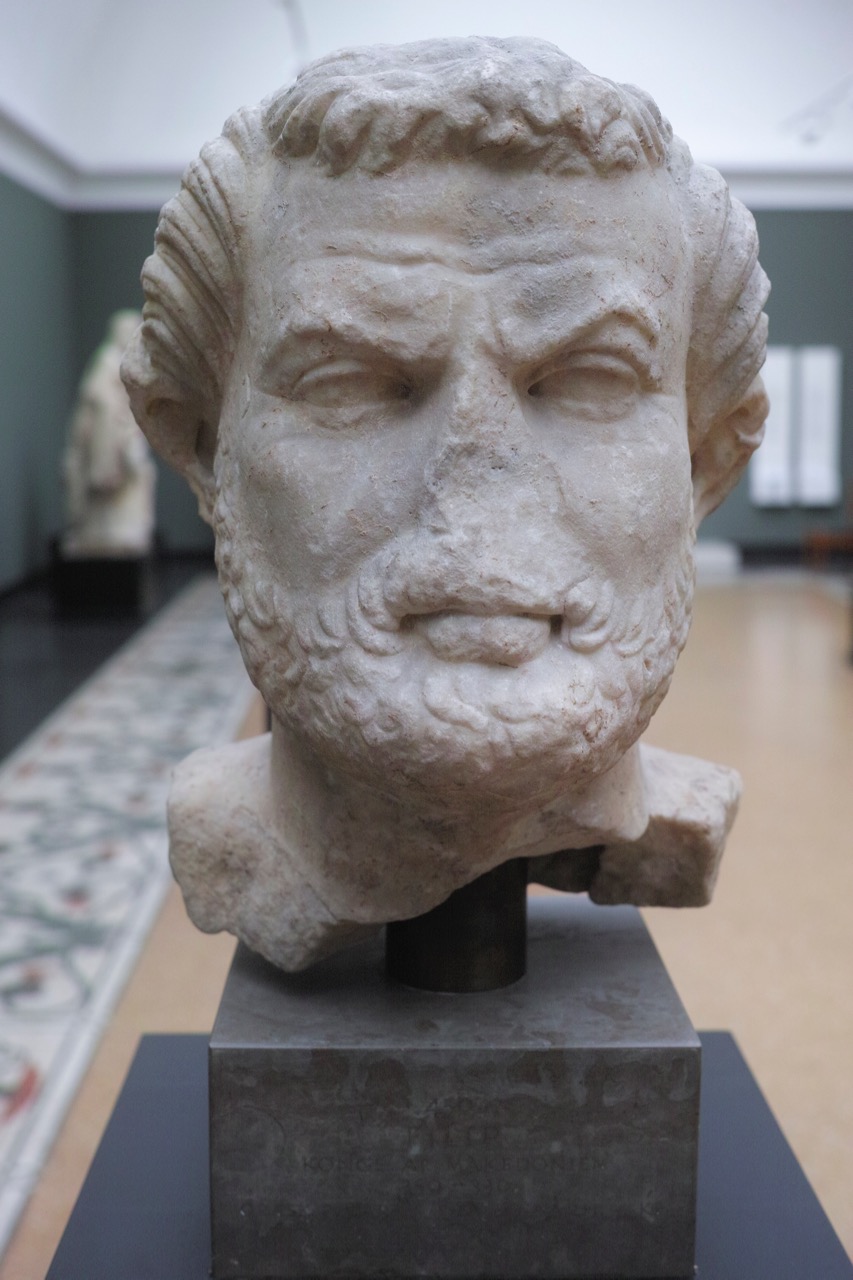
In the old days authenticity meant “true to life”, true to what the senses communicated (with a whole lot of vain idealisation going on too, of course). When these ancient statues were sold to museums and collectors during the centuries (mainly the 19th), many of them were restored. Noses, hands and other delicate extremities were likely to have been chipped or chopped off by destiny and now had to be replaced in order to secure… authenticity. However, the concept was no longer the same within the institutional world. During the 19th century, authenticity suddenly meant that the statues themselves had to be authentic; not necessarily the subjects. In order to achieve this, a multitude of recently added noses were now suddenly yet carefully chipped away. Not by destiny or climate but by diligent and conscientious staff with fine tools. The Ersatz noses eventually ended up in museum collections of their own: Nasotheques.
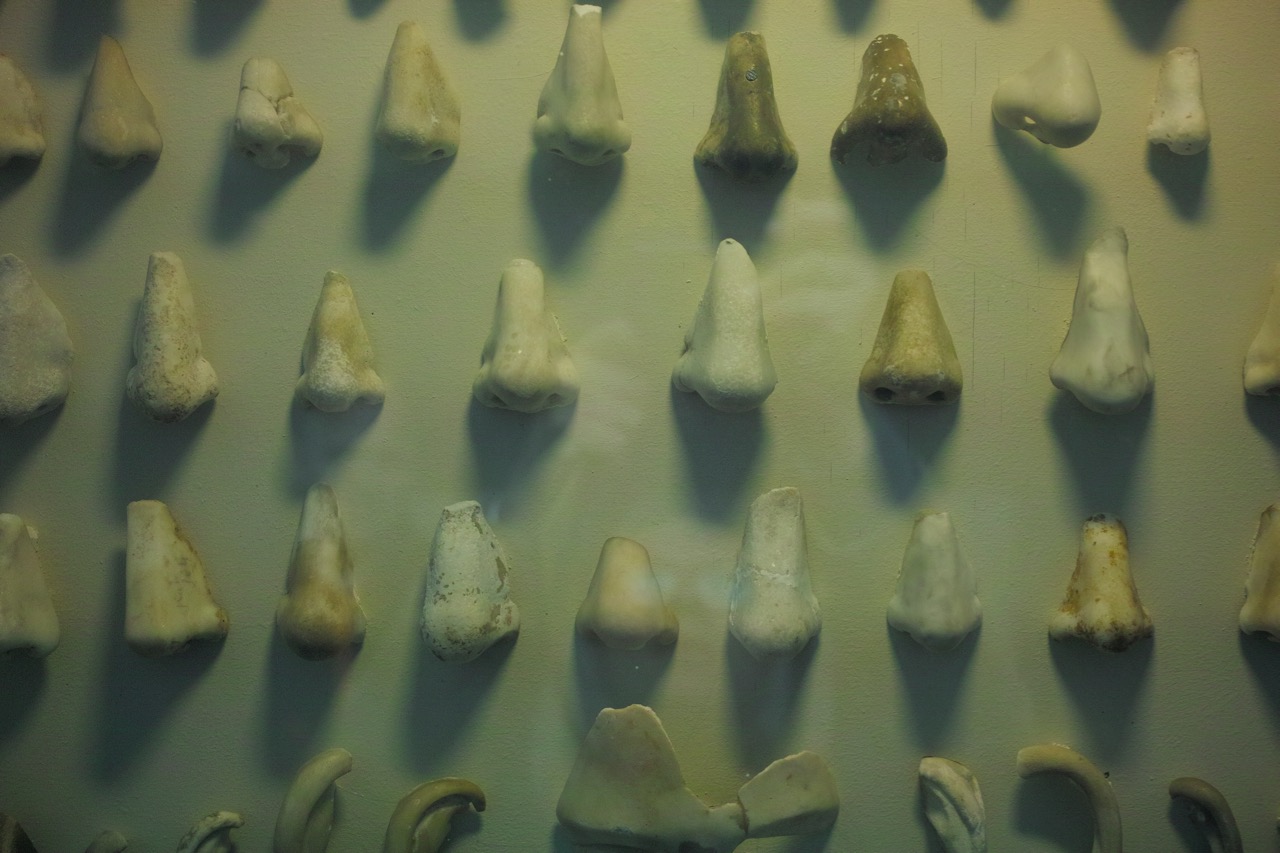
Of course this brings to mind the wonderful story by Gogol: The Nose (perhaps inspired by the museal goings-on in the vast amassement of the emerging Russian collections of antiquities). Ivan Yakovlevich, a narrow-minded barber, wakes up and finds he has a human nose. That is, not his own but another, loose one. At the same time Collegiate Assessor Kovalyov finds that his own nose is missing, and sets off to look for it. When the runaway nose is eventually retrieved, it won’t fit Kovalyov’s face anymore. Describing the reactions of these two protagonists to owning/losing such a literally central feature was a clever attempt of Gogol’s at satirising about then current Russian mindframes. With this story in mind, it’s easy to regard the Nasotheque as a double-layered vanity project. The thing should no longer be where it belongs but preferably displayed separately in order to make the original vacuum fit a bigger picture of majestic vanity mixed with, perhaps, a more genuinely sentimental Tempus Fugit awareness.
“My God, my God! What have I done to deserve this? If I’d lost an arm or a leg it wouldn’t be so bad. Even without ears things wouldn’t be very pleasant, but it wouldn’t be the end of the world. A man without a nose, though, is God knows what, neither fish nor fowl.” (spoken by Kovalyov, not one of the Roman statues)
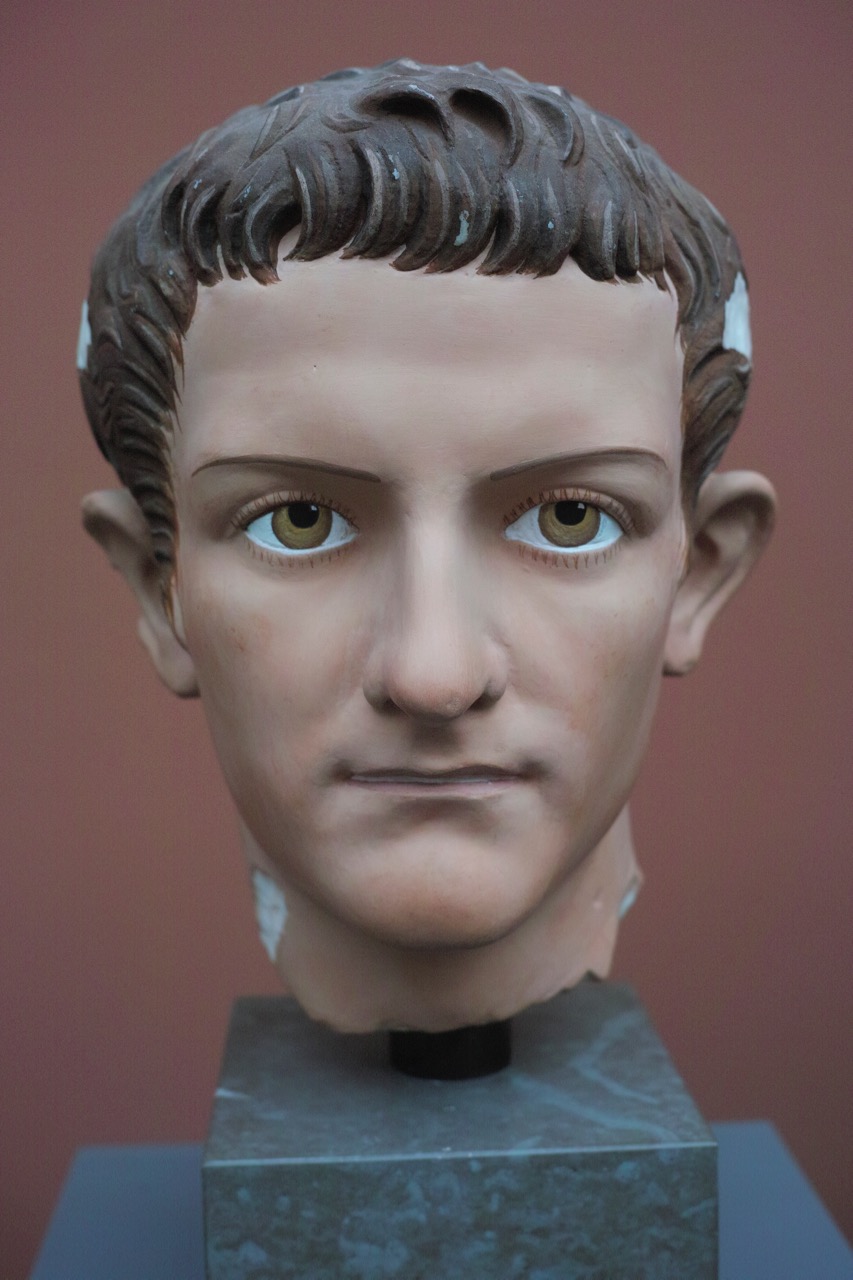
Emperor extraordinaire Caligula, as he may have appeared originally.
Another aspect of the same phenomenon is the current re-painting of statues/busts. Originally, marble (and other possible material) wasn’t displayed as white at all, but painted in bright, vivid colours. The noble characters were more like super-human, made up mannequins than estranged, death pale/white manifestations of refined marble beings. The few newly painted examples presented at the Glyptotek appear comic-book-like, primitive, and, in a strange way, inauthentic. We have grown accustomed to the ”look” of antiquity, regardless of what it all actually looked like way back when. That’s why the heavy museums weave a very powerful wand. If you can control how we regard and integrate history, that will affect the entire Weltanschauung we have in regard to today as well as to the future. Provided there will be one, of course.
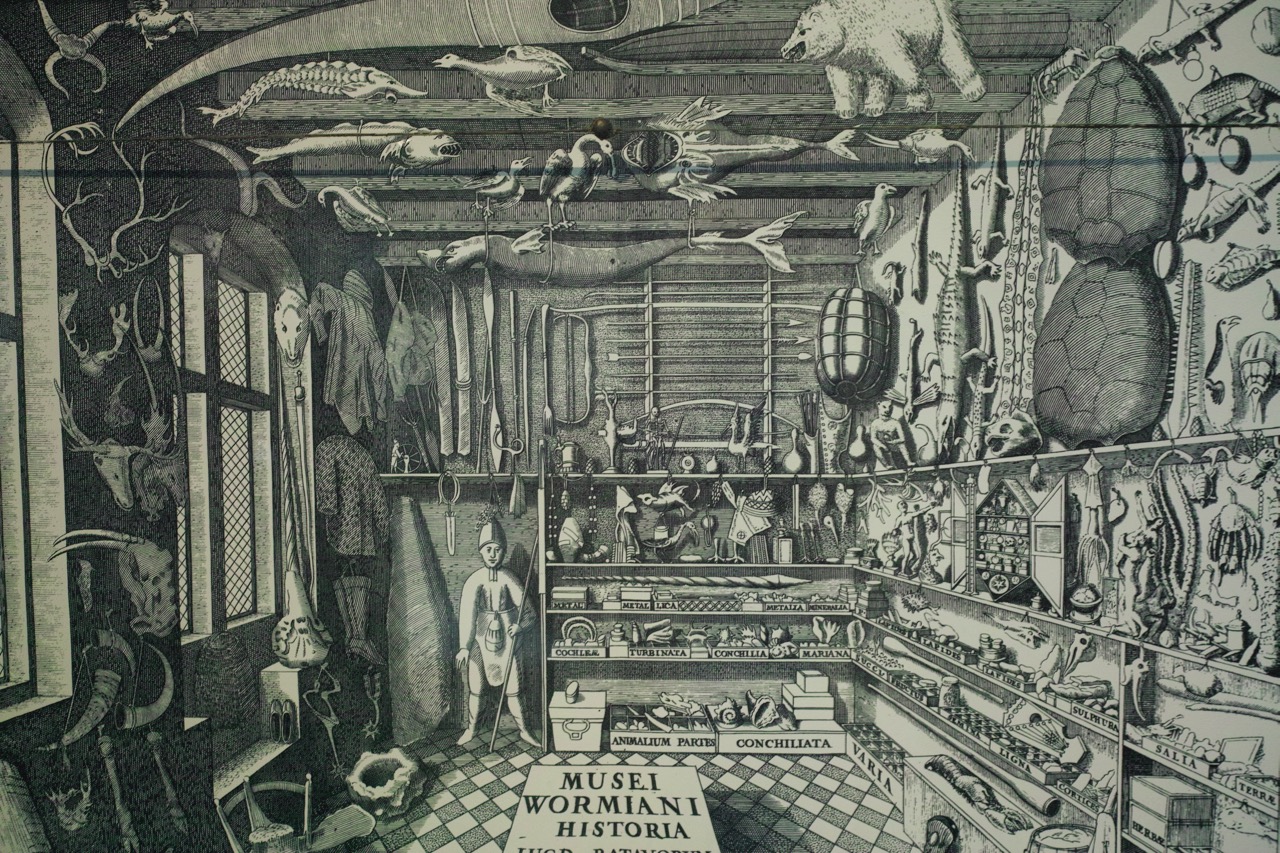
More on the lovely cocktail of vanity and preservation: Once upon a time, large parts of the world was unknown. It’s a concept hard to grasp for modern people. When explorers returned after journeys to unknown lands and/or cultures, their rulers were swift to integrate whatever they had found in specialised collections. This became the foundation for the enthusiastic Wunderkammer-phenomenon, with both institutional and private displays of oddities and natural curiosa. At the Natural History Museum in Copenhagen, there is a small section/room dedicated to a reconstruction of the Ole Worm collection. The space is filled with stuffed animals (including an ice bear hanging from the ceiling), stones, shells, a kayak, exotic objects, skulls, bows and arrows. It’s small compared to other similar collections but still remarkable. The enthusiasm generated when you just stuff as much stuff as possible into a minuscule place lingers on in a pleasant way. It is also totally against our abstracted contemporary ”curating” (meaning: finding themes that aren’t really there), and that is genuinely liberating to take part of. Exotica? Yes. Colonialism? Maybe. Kitsch? Absolutely not.

Slightly more systematic is the collection of beer bottles at the ever expanding Carlsberg-byen (”the Carlsberg village”, a centre of brewing, business and belching). The place as such is a dismal magnet for people looking for cheap beer under the transparent banner of curiosity. Carlsberg may make, according to themselves at least, ”probably the best beer in the world”. But no matter how much lifestyle-choking they attempt in their ”concept” store, a beer is still just a beer. Their collection of beer bottles is amazing though. Currently there are approximately 22.000 bottles of beer from all over the world in a display that is very similar to that of jarred biological specimen in other kinds of museums. Maybe the 22.000 bottles will serve as a well needed repository after the great deluge? Gogol would perhaps not agree:
“But nothing is lasting in this world. Even joy begins to fade after only one minute. Two minutes later, and it is weaker still, until finally it is swallowed up in our everyday, prosaic state of mind, just as a ripple made by a pebble gradually merges with the smooth surface of the water.”